Apple has launched Apple Pay in India, starting with select Visa and Mastercard credit cards from Axis Bank. Users will be able to make payments at supported stores, apps, and websites without entering card numbers or OTPs.
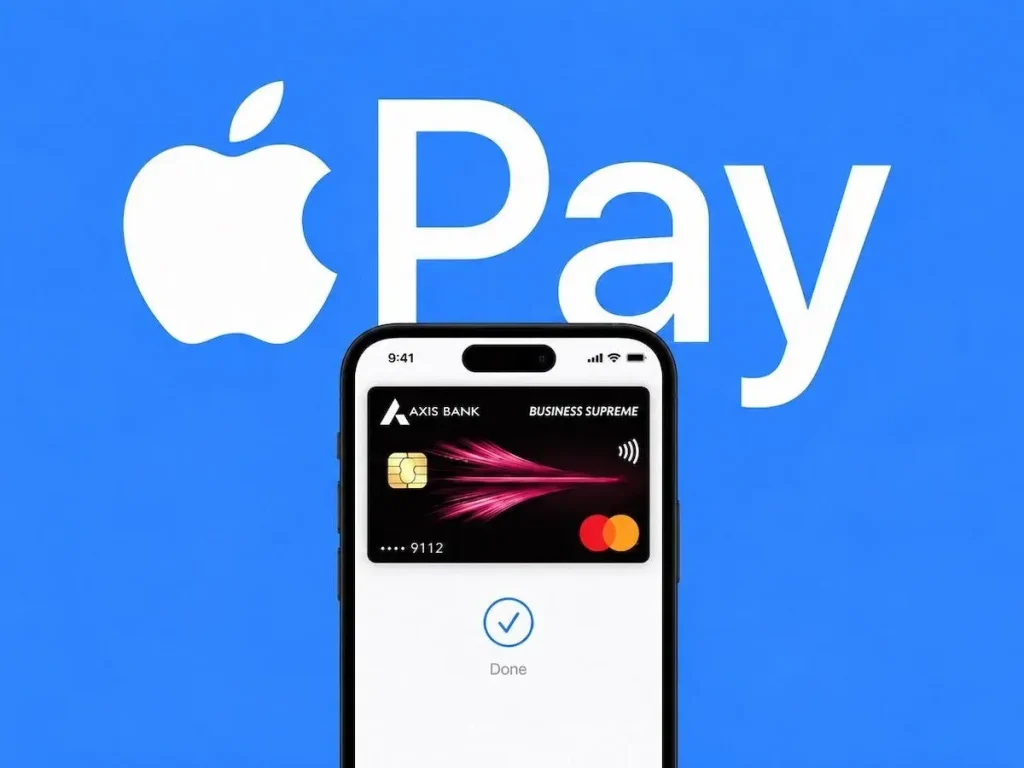
After a long wait of nearly 12 years, Apple has finally launched its payment service, Apple Pay, in India. It has debuted in the country in partnership with Axis Bank. Initially, select Axis Bank Visa and Mastercard credit cards will work with Apple Pay. Apple has stated that other banks and financial institutions issuing cards will also be integrated into the service in the future. It is worth noting that this service is distinct from UPI.
With Apple Pay, users can make payments at stores, within apps, and on websites using their iPhone, iPad, and Apple Watch. There is no need to enter card numbers, PINs, or OTPs for every transaction; payments can be authorized using Face ID, Touch ID, or the device’s security mechanisms. According to Apple, support for Apple Pay on Mac is also coming soon.
Initially, only select Axis Bank cards
Apple Pay’s initial availability in India is quite limited. Currently, only eligible Axis Bank credit cards on the Visa and Mastercard networks can be added to Apple Pay. RuPay cards are not supported at this time. Similarly, cards from major issuers like HDFC Bank, ICICI Bank, and SBI Card are not available at launch.
Users can add their eligible Axis Bank cards to the Apple Wallet. Once added, payments can be made by simply bringing the iPhone or Apple Watch near a contactless payment terminal wherever Apple Pay is supported. Apple Pay can also be used for online payments and transactions within apps.
Apple Pay won’t work on every card machine
Despite its launch in India, Apple Pay cannot be used everywhere right away. The merchant or payment terminal must support Apple Pay to process the transaction. Therefore, even if standard contactless card payments work at a particular location, Apple Pay might not necessarily function there.
Initially, Apple Pay is being rolled out to merchants across categories such as food and beverage, travel, fashion, and lifestyle. The company plans to add more merchants and apps over time.
How Apple Pay differs from UPI
Apple Pay has entered the Indian market at a time when UPI remains the primary mode of digital payment. While UPI facilitates direct bank-to-bank transfers, Apple Pay’s initial model in India is card-based. Consequently, its scope will differ significantly from that of UPI, at least in the beginning.
It is worth noting that Apple is expanding its iPhone sales, manufacturing, and retail presence in the country. Now, with Apple Pay, Indian iPhone and Apple Watch users will gain an additional payment option within the company’s ecosystem.