Duplicate Aadhaar cards pose a major problem, and to address this, researchers associated with UIDAI have developed the ‘Bharat ABIS’ tool. It has been specifically designed to prevent people from obtaining duplicate Aadhaar cards. How it works…
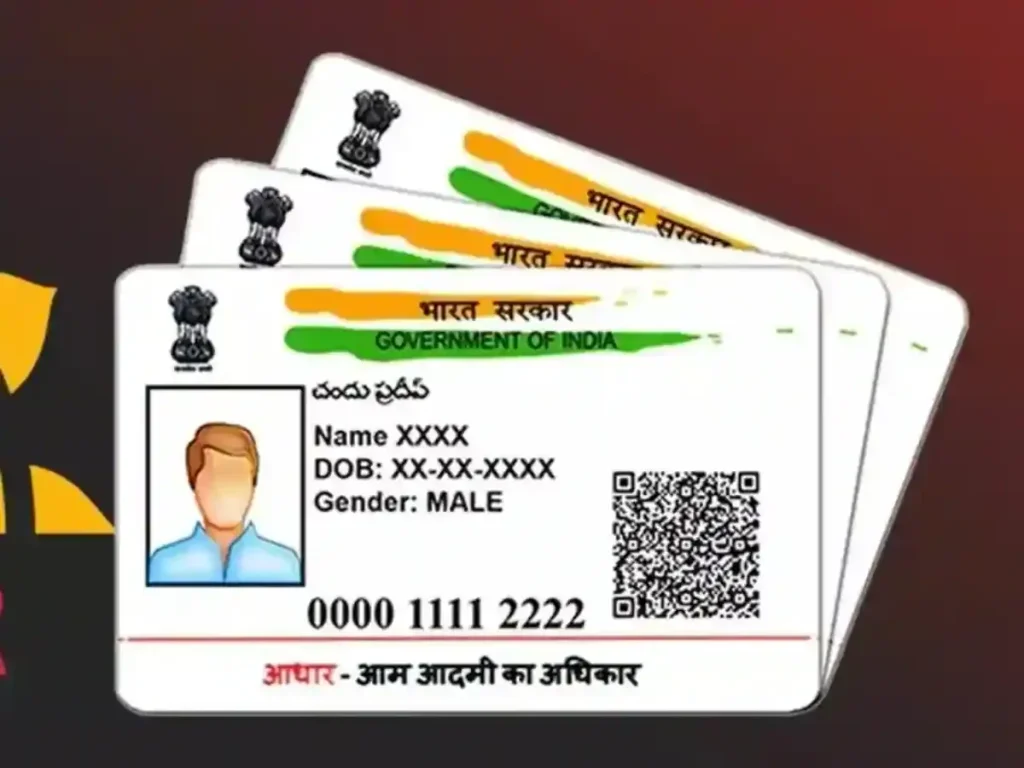
Duplicate Aadhaar cards pose a significant problem. To curb this issue, researchers associated with UIDAI have developed ‘Bharat ABIS.’ It was created specifically to prevent individuals from obtaining duplicate Aadhaar cards. This open-source biometric verification system appears to offer superior speed and accuracy compared to the systems currently in use. The research team comprised six researchers from UIDAI, one from IIIT Hyderabad, and Anil Jain, a renowned biometrics researcher from Michigan State University. The study is titled “Towards Billion-Scale Multi-modal Biometric Search.”
The study explains how the open-source multi-modal biometric system, Bharat ABIS, manages large databases. The system maintains speed and accuracy even when adding new IDs, ensuring that no duplicates are created and that entries are not flagged incorrectly. Notably, in 2022, the Ministry of Electronics and Information Technology (MeitY) informed the Lok Sabha that approximately 600,000 duplicate Aadhaar cards had been identified and cancelled by May of that year.
The researchers state that the ABIS system was tested on 220 million (22 crore) Aadhaar records. However, the system was initially trained on smaller datasets containing between 100,000 and 200,000 entries. The data was de-identified before being fed into the system.
What is Bharat ABIS?
ABIS stands for Automated Biometric Identification System. Bharat ABIS combines an individual’s fingerprint, iris, and facial data to create a compact 13.5kb template. This template is then cross-checked against the database to determine if the individual already holds an existing ID. To handle large-scale operations, it features a scheduler that distributes search tasks across multiple servers. While the system can function using only fingerprints or only iris scans, accuracy improves significantly when all three data types are used together.
How effective is Bharat ABIS?
According to the study, Bharat ABIS has a ‘False Positive Identification Rate’ (FPIR) of 0.1 percent. FPIR measures the error rate where the system might mistakenly identify duplicate entries. UIDAI’s target rate for vendors is 0.5 percent; the ABIS error rate is lower than this. The ‘False Negative Identification Rate’ (FNIR)—which measures the error rate of failing to detect duplicate entries—is 0.05 percent for Bharat ABIS, against a target of 0.1 percent. Note that both these scores are based on a database of 20 million (2 crore) records.
Researchers compared ‘Bharat ABIS’ with three existing tools used in the Aadhaar ecosystem. The study indicates that on a database of 20 million records, the accuracy of ABIS is either equal to or better than those three tools. It states that the system’s ‘DeepPrint’ fingerprint model, when combined with vendor tools, can cut the number of authentication failures in half. This will particularly benefit the elderly and manual laborers, whose fingerprints are prone to wearing down. This could facilitate millions of daily transactions.
Additionally, the study notes that Bharat ABIS can perform 100 searches per second against a gallery of 40 million records on a single server. This server utilizes 8 Nvidia H100 GPUs and 2TB of RAM. Researchers state that ABIS could become a primary means of biometric identification for the approximately 160 countries with populations of less than 20 million. According to the researchers, while these nations might not be able to afford off-the-shelf systems from vendors, they could adopt ABIS due to its open-source nature. However, the study also notes that large-scale testing of ABIS is essential before drawing any conclusions about its effective performance with massive databases (such as India’s Aadhaar system).
This implies that ABIS appears to be a promising step toward preventing duplication in ID systems like Aadhaar; however, it is premature to say whether such an open-source platform will be ready for implementation in the near future.